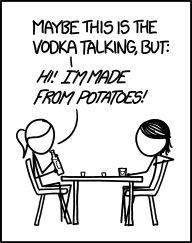
XKCD: Maybe this is the Vodka Talking
Posted by Reese on 2015-05-22 @ 06:42am
Comments Off on XKCD: Maybe this is the Vodka Talking
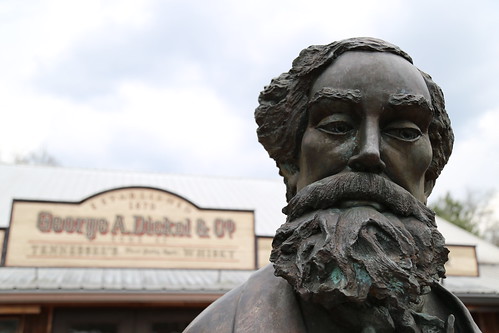
In March, I had the honor of traveling to Tennessee to visit the George Dickel Distillery. Visiting a distillery and seeing the process, place and people first hand gives me a much deeper understanding of a spirit than marketing materials, buying a bottle or even a guided tasting can. Touring the Dickel Distillery in Cascade Hollow drove home one fact. “Handmade the Hard Way” is far more than just a slogan for all of the people involved in making Dickel whiskies. It is truly a way of life.
A Bit of History
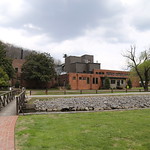
Driving to the distillery, which lies about an hour’s drive southeast of Nashville, you leave the city and its surroundings and then almost immediately plunge into rolling hills, grassy meadows and dense forests. As you get closer to Cascade Hollow, your surroundings change to pastures and farm land surrounded by dense wooded areas. Looking at the aerial maps (thanks Google) you can clearly see where the forest has been cleared away to make room for that pasture and farm land. Thinking about it, you start to get an idea of what the area must have looked like in the 1860’s when George Dickel first visited. Tucked back in a valley, it’s easy to see why he chose Cascade Hollow as the home of his namesake whisky distillery.
In the 1860’s, George Dickel was a prosperous merchant in Nashville with interests in shoemaking, orchards and most notably liquor wholesaling. Legend says George Dickel and his wife visited Cascade Hollow in 1867 on a vacation from Nashville and established the distillery shortly thereafter in 1870*. Having found a spring near the site of the distillery there was an abundant source of pure water for whisky production. Dickel quickly began production of his namesake whisky, which he insisted was on par with any of the more famous Scotch whiskies and, to show that fact, insisted on dropping the ‘e’ from whiskey. George Dickel died in 1894 and oversight of the distillery and other businesses passed to his wife Augusta. She ran the distillery with George’s long-time business partner until Prohibition changed everything. Prohibition hit Tennessee earlier than the rest of the country when the sale of alcohol was prohibited in 1907. Ten years later (and 2 years before the rest of the country), the possession of alcohol was also made illegal in TN. This put an end to distillation at Cascade Hollow for over 40 years. In the late 1950’s the Dickel distillery was rebuilt on the old Cascade Hollow site. Ralph Dupps took over operations at the distillery and the old recipes were shared by distillers who had made the whisky in years past. Operations haven’t changed much since then as I was soon to find out.
Water
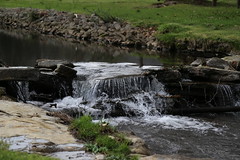
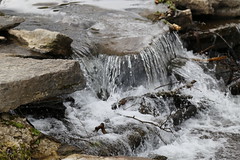
Like every distillery, the water used to make the George Dickel line of whiskies is essential to the flavor profile they’re looking for. When first scouting the area George found a spring not far from the site of the current distillery. This is where he established his original operation as it wasn’t worth it to transport the water down the valley. The distillery now uses the same water source but pipes it down from the mouth of the spring. In addition to providing what is possibly the most important ingredient in the whisky, the spring also feeds a picturesque little stream that divides the distillery proper from the visitor’s center.
Grain, Mashing and Fermentation
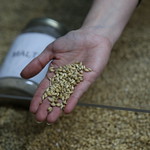
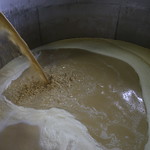
Dickel uses a mash bill consisting of 84% corn, 8% rye and 8% malted barley. All of the corn is sourced from Tennessee and the rye and barley sourced from as close as possible while maintaining the quality the distillers require. I had always wondered why so many whiskey recipes call for malted barley and Allisa informed us that without malted barley your mash will lack an enzyme that assists with the fermentation. You can add the enzyme, but at Dickel they find the barley also contributes to the flavor profile they’re looking for. The grains are milled on site in a hammer mill and combined in succession during the mashing process. It was interesting to see that the grain is weighed manually in a huge balance above the mash tubs and recorded, also by hand, in a paper ledger.
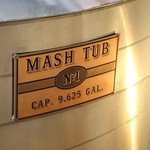
Dickel leverages the sour mash process in a pair of 10,000 gallon mash tubs which, all told, takes about 4 hours. After the mash process completes the two tubs are combined into one of nine 20,000 gallon fermenters. Into each fermenter the distillers pitch Dickel’s proprietary strain of yeast and begin the fermentation. It’s somewhat odd, I’ve been on quite a few distillery tours and I’ve only ever seen the yeast once. It’s one of those secrets that distillers generally keep to themselves. Dickel was no different in that respect. Fermentation is a 3-4 day process and is, not surprisingly, monitored by hand or rather, taste, smell and temperature.
Distillation and Mellowing
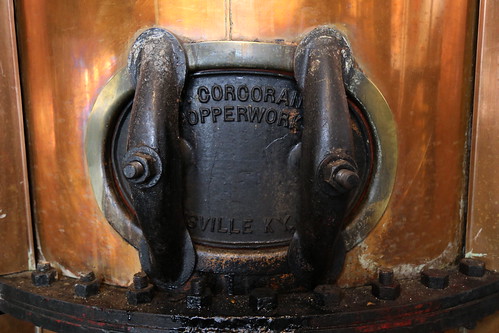
Once fermentation is complete, the distillation can begin. The first distillation of Dickel whisky is by way of a ~30ft column still. This brings the spirit to a proof of 110-115. From there it goes through a “doubler” which brings it to a final proof of 125-135. Next comes Dickel’s signature charcoal mellowing process. But first the whisky is brought down to 40 degrees F. I asked why, thinking it strange that they’d spend the time and energy for this step. Allisa explained that George Dickel produced whisky year round, but for reasons he couldn’t explain found that whisky made in the colder winter months tasted better. This chilling process is what became of George’s findings. Does it have an impact, I can’t say, but there are certainly chemical changes that occur or are inhibited depending on temperature, so there is probably some merit there.
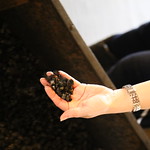
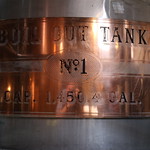
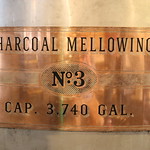
Once chilled the whisky is poured into the mellowing tanks. In these tanks is 10-13 feet of maple charcoal bookended by stainless plates and wool filters. Upon entering the mellowing tank the whisky will take 7-10 days to fully move through the charcoal and come out the bottom. This is, hands down, the longest part of the distillation process. But, tasting their rye really showed me the value of this process. Compared to very similar ryes (same mash bill, age, producer) that hadn’t been mellowed, the Dickel rye was smoother and had much less bite. Oh yeah, those mellowing tanks, they’re filled by hand, bucket brigade style, one bag at a time.
Aging
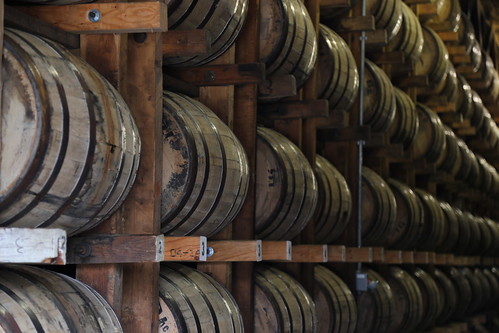
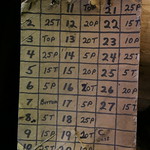
Dickel whisky, once mellowed, is barreled by hand (no surprise there), two barrels at a time and transported up the hill to the warehouses. Dickel has 11 original warehouses which store 13K-15K barrels each and a brand new warehouse that can hold 52K. Each of the original warehouses is a single story. Barrels are racked 6 high and 27 deep. Touring a barrel house like this is really an amazing experience. The smell alone makes you want to never leave the place. It’s an aroma of wood, moistened with whisky and the undeniable feeling of age. Hard to explain and even harder to forget. As we were walking around we asked about a hand written cardboard chart hanging from one of the racks. Allisa explained that since the barrels go 27 deep and they get there by rolling over and over, this chart indicates where the bung on the barrel needs to start so that when the barrel stops rolling the bung will face up and not leak. It’s these touches that we saw throughout the distillery that kept hammering home that “Handmade the Hard Way” slogan.
Dickel whisky isn’t aged to become a specific bottling from the start. Instead barrels are sampled throughout the aging process and it’s then decided if they’re on their way to flavor profile of Number 8, Number 12 or possibly Barrel Select. There is even rumor of some “older stuff” having recently been discovered. Fingers are certainly crossed for some more of the older hand selected barrel or even something else interesting.
One bit of math before I move on. Assuming the new warehouse isn’t used yet, that gives Dickel 11 warehouses with, conservatively, 12K barrels each. That’s 132K barrels. If each holds about 52 gallons of finished whisky, that multiplies out to 6,864,000 gallons of whisky being aged at any given time. That’s about the capacity of 10 olympic size swimming pools or a pond 500 feet in diameter and 4.5 feet deep. Best. Water. Feature. Ever.
Misc Thoughts
Through the day at Dickel there were constant reminders of their slogan or, rather, the way they live their life and make their whisky. It was interesting to hear that they had recently switched to two shifts but could quadruple their current production without having to change the process too drastically. With a giant parent company like Diageo they could easily be forced to make changes but Allisa assured us that Diageo appreciates Dickel’s handmade qualities and that Dickel has “a lot of room to grow and stay the way we are”.
Allisa herself embodies “Handmade the Hard Way”. She was born and raised in Tullahoma and started her career at Dickel with the goal of creating a tour program. After about 6 months, Allisa moved to a more hands on role in producing the whisky. She spent the next 10 years working along side the master distiller and ambassadors crafting tasting events, trainings, etc and grew into the Distiller role she holds now. Allisa summed it up best. “I have the best job in the state … the country!”
PS – The rest of the pictures are in this Flickr album if you’re so inclined.
* There are other stories, but I rather like this one.
†The George Dickel Distillery paid for this trip (as mentioned). As such, it falls under my sample policy. If you’re wondering what that means check out my sample policy.
Clementines are everywhere this time of year, which is fantastic! Clementines are the perfect cocktail orange. So, granted, they’re technically tangerines, but, hear me out on this one. They’re perfectly sized for cocktails (you’ll get 1 1/2 – 2 oz of juice from each one), the flavor is better than most mega-mart oranges and you can eat the leftovers for a snack. See? Perfection. You can use the juice as a one for one replacement for most cocktails (it has a bit more sourness so be aware) or you can make up something new. Like such.
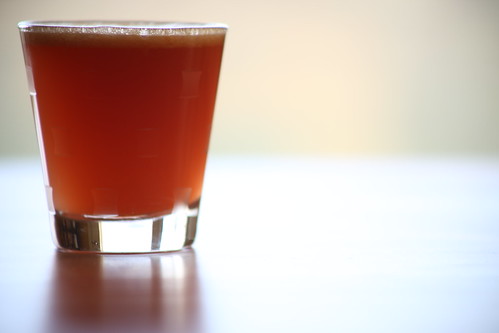
Coral Rose
2 oz Clementine Juice

1 oz Lime Juice

2 oz Rye Whiskey

1/4 oz Orange Bitters *
This cocktail is tart, sweet and nicely complex from the added bitters. The rye (Dickel in this case) is a great whiskey for this drink since it has the power to stand up to the other ingredients and the spicy quality plays well with the sweetness from the juice. Very refreshing overall and, like so many other cocktails, goes down way too easy.
* Instead of orange bitters, I used some of my homemade hibiscus orange bitters. Basically the same ingredients as this recipe but with some added hibiscus flowers. They add a great color and a very light floral quality.
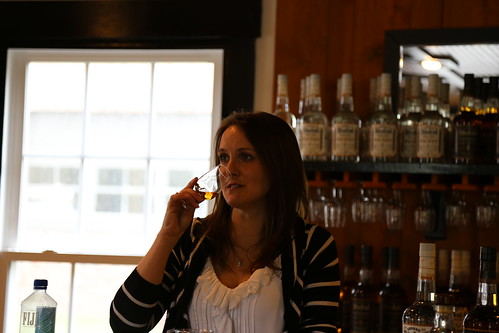
I recently had the incredible opportunity to visit The George Dickel Distillery in Cascade Hollow, TN and taste their full range of whiskies with distiller Allisa Henley. I have lots to share about the distillery, the processes and the whole experience, but that will come in a later post. This post is a quick overview of their whiskies. Some points to think about as you read through this.
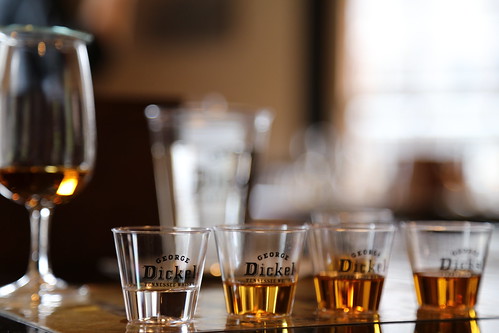
First, Dickel produces five Tennessee whiskies and one rye. All five of the TN whisky varieties use the exact same mash bill, follow the same distillation and mellowing process, and are aged in the same barrels in the same warehouses. The only differences are their age, the blending and, in the case of the hand selected barrel, where the barrel aged in the warehouse plays a part. The similarities between the whiskies give you a unique opportunity to really taste the impact that the barrel aging imparts on the whisky over the years.
Second, the whisky recipes (No. 1, 8 and 12) do not dictate the age of the whisky. While there are typical ages that comprise each recipe, the recipe is actually better thought of as the flavor profile that is produced. And, while we’re talking about the numbers, no one really knows where the No. 8 and No. 12 names actually came from. Any written history of where that naming convention originated has been lost to the sands of time. Okay, enough rambling, whisky time.
No. 1 – Unaged – 45.5% ABV
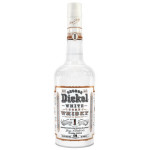 Recipe No. 1 is Dickel’s unaged white whisky (white dog if you like). Though, as I mentioned, it does go through the same charcoal mellowing as all of Dickel’s other whiskies. The aroma is dead on buttered popcorn. It’s really uncanny how much the aroma of butter comes through. The grain aromas and flavors are very pronounced and there is a notable corn sweetness. The whisky itself is very smooth given its proof and the burn I’d expect from an unaged whisky is only a passing trace.
I’ve always had some trouble tasting (and enjoying) white whiskies. But, while tasting No. 1 with Allisa, she mentioned something that really rings true. You have to taste and think about white whisky not in comparison to other whiskies, but rather in comparison to other clear spirits (namely vodka). If you put yourself in that mindset, it all makes a heck of a lot more sense. And for me, the cocktail ideas all seemed more logical.
Classic No. 8 – 5-7 years – 40% ABV
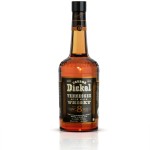 Recipe No. 8 is aged 5-7 years and the character still carries a lot of the grain notes that the No. 1 started with, but adds classic barrel aged flavors and aromas. With the grain notes you still get the hints of buttered popcorn and subtle sweetness. Layered on top of those are flavors of light maple, oak, caramel and vanilla and the lightest hint of smoke. The caramel and vanilla, while present, are still background elements at this age. There is a definite boldness to this whisky that more years in the barrel begins to tame.
Superior No. 12 – 7-9 years – 45% ABV
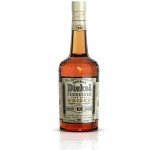 Recipe No. 12 spends 7-9 years in the barrel and this is where you can really start to note the huge changes that the barrel makes in that 2 year difference from the No. 8. In the No. 8, the caramel and vanilla notes were there, but really more background flavors. In the No. 12, caramel and vanilla are front and center backed by leather and tobacco flavors. The grain and corn flavors, while still present are also far more muted.
Allisa mentioned that Dickel fans typically fall into one of two camps. They either drink the No. 8 or the No. 12 almost exclusively. Sampling the two whiskies side by side you can really see (or should I say taste) why. Despite their same lineage, these whiskies have vastly different personalities. No. 8 speaks more of the grains and No. 12 of the barrel. It’s like two siblings. You can see the resemblance, note the characteristics that tell you they’re definitely related, but then their unique personalities set them apart.
Barrel Select – Minimum 10 years (generally 10-12) – 43% ABV
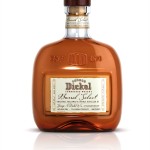 Dickel Barrel Select is a small batch blend of 10 barrels hand selected and blended to reach the flavor profile desired. Allisa’s quote about the Barrel Select really summed it up perfectly. “So smooth it’s scary.” The additional age for the Barrel Select has turned the bold No. 12 into a sipping whisky that really could be dangerous. It goes down easy and before long you realize your glass is empty but you’re left wanting more. The flavor continues the caramel and vanilla profile that was so bold in the No. 12 and adds a layer of Christmas spices and rolls it all up in fantastic smoothness.
Hand Selected Barrel – 9+ years – ABV Varies by Bottling
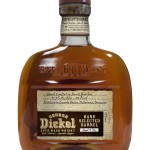 Dickel’s hand selected barrel program lets outlets go through the process of selecting a single barrel of Dickel that possesses the exact qualities they’re looking for. We tasted a 9 year old version (which is also what I received a few months back). Although, I have heard tell of some 14 year old bottles out there (let the search begin)! The flavor difference between the Barrel Select and the Hand Selected Barrel is striking. The Hand Selected Barrel that we tasted was far bolder than the Barrel Select and had a much fruitier quality to it. I should note that the Hand Selected Barrel was also at 51.5% ABV. With this particular selection sitting right at the high age point for the No. 12 you also get a lot more of the bold caramel and vanilla.
Rye – 5-6 years – 45% ABV
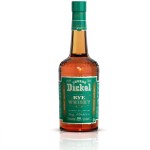 George Dickel partners with MGP out of Indiana for the production of their rye for reasons that were both unknown and unexpected for me. We asked Allisa if they had considered distilling their own rye base spirit and she said that they had tried it. The problem is when you distill rye it is very foamy and comparatively sticky. So, in order to transition between rye and their normal mash bill they have to shut down production completely, clean everything from top to bottom and then restart normal production. When you read the next blog installment about their distillery it will make a lot more sense why the logical move is to partner with a distillery that specializes in rye. Allisa also added that the MGP folks are meticulous about the production and Dickel can dictate exactly what they want from start to finish.
And, what Dickel wants is a 95% Rye, 5% Malted Barley rye whisky that is aged for 5-6 years. Keeping true to their tradition, Dickel then charcoal mellows the rye in the same process used for their Tennessee whisky before bottling. Dickel rye is the only rye that goes through the charcoal mellowing process and you can taste the difference. The classic rye spiciness is toned down a bit and the mellowing gives the whisky a very smooth quality that’s rare in rye whiskies. There are hints of maple, christmas spices and subtle vanilla sweetness.
If you ever get the chance to taste the full Dickel line-up in one sitting, you definitely should. It’s a similar experience to a wine flight. You really get a sense for what time in the barrel does for the whisky and why spirits are aged for the times that they are.
†The product reviewed here was provided to me as a free sample. If you’re wondering what that means check out my sample policy.
Winter finally arrived here in Colorado to the tune of 12-16″ of snow at my house. And that doesn’t even begin to compare to what the Northeast has seen. But, you know what that means, friends? It’s time for hot drinks, with booze. I went for a hike in the snow yesterday and I definitely needing the warming strength of a toddy when I got home.
A traditional Hot Toddy is simply spirits, hot water, some spices and a bit of sweetness. I wanted to stay semi-traditional but combine the classic toddy with hot mulled cider. My thought process was a little fragmented starting with apple juice (duh) and brewed black tea, maybe some spices… But that led to a stroke of genius (can I call myself a genius?). Chai concentrate, specifically Bhakti Chai concentrate. Bhakti is highly spiced, full of ginger spiciness and already sweetened. Add a touch of water to bring the sweetness down and the Spiced Apple Toddy was born.
But, hold your horses. We need to talk liquor for a moment. Surprising, I know. Like I say in the Hot Toddy post, you have to go with a brown liquor. There is something inherently warming about a barrel aged spirit. For me, the only real option is whiskey. Or in this case, whisky. Whisky’s flavor profile of vanilla, oak, caramel and spices just works too perfectly and it has a certain gravitas. I mean, you never hear of an old timer pulling out his flask of bubble gum vodka.
For this cocktail, I reached for George Dickel No. 12. It has a bold but smooth character that gives it the spine to stand up to the bold flavors of the chai and sweetness of the juice. Plus, that boldness isn’t harsh which lets it blend into the cocktail in a truly harmonious way. Pro tip time. Keep the pour of whisky a bit light. Lets you hydrate, warms you up AND makes is way easier when you want a second…or ninth.
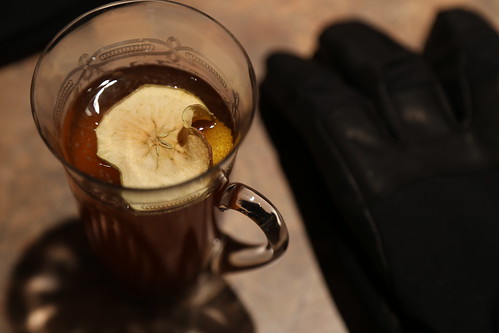
Spiced Apple Toddy
3 oz Apple Juice

3 oz Bhakti Chai Concentrate

2 oz Water

1 1/4 oz George Dickel No. 12 Tennessee Whisky

Orange Twist

Slice of Apple
1) Combine the chai, apple juice and water and heat to nearly boiling

2) Mix in the whisky

3) Garnish with an apple slice and an orange twist
Final thoughts. You can (and should) switch up the chai, juice and whisky for whatever your personal favorites are. But if you haven’t had Bhakti Chai, you really need to. The same goes for the water, tweak that amount to whatever fits your palate. This cocktail, like any, is meant to make you (or your guests) happy. So do what works for you.
†The product reviewed here was provided to me as a free sample. If you’re wondering what that means check out my sample policy.