Cocktail Hacker

    Hack What You Drink

Archive for the ‘Wrap Up’ Category

Lemon Drop – Mmmm…Lemony

Posted by Reese On March - 11 - 2009

Let me start with a sincere apology for the delay in wrapping up the Lemon Drop. Early in the weekend I decided I wanted to experiment with a couple things I hadn’t had a chance to. In addition, I decided I was going to not feature a cocktail this week. So, that delayed this wrap-up.

Enough of that. Let’s talk cocktail. I started the week wanting to feature another vodka cocktail and immediately thought of the Lemon Drop as a good candidate. That was certainly not a bad choice. I’ve truly enjoyed playing with this cocktail this week, although sadly I don’t feel that we’ve really covered a “true” vodka cocktail with this one. Sure, it uses vodka, but it’s a flavored vodka. So, I’ll be back to vodka soon I feel.
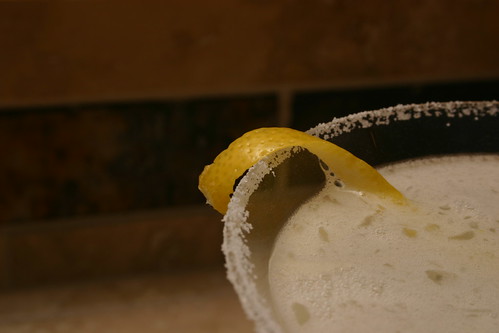
Lemon Drop Cocktail

My starting recipe, like most times, was Regan’s (2 oz Citrus Vodka, 1 oz Lemon Juice, 1/2 oz Simple Syrup) and it was great. There’s a wonderful lemon punch that’s “lemontastic” as I wrote in my tasting notes. There is a great balance of sour and sweet. Overall a very drinkable cocktail. Having tried the classic though I noticed that Gary briefly mentions a modification to give the drink more depth of flavor. Naturally I had to try it.

He says that swapping Cointreau for the simple syrup is the way to go. How much? No mention of the proportions. Experimentation called to me and I started with a simple one for one swap. The resulting drink was okay, but much less sweet than the classic. Generally not what I was looking for. So, for the next go-round I upped the Cointreau to 1 oz.

This was more like what I was wanting. The drink was sweeter, coming closer to that nice sweet/sour balance achieved by the classic recipe. You can definitely detect the higher alcohol content, but it’s not unpleasant at all. The depth of flavor is there but I really don’t think it’s hugely better than the classic recipe. Plus, the lemon-ness of the drink is slightly muted by the flavor of the Cointreau. I’d say give it a go if you’re looking for something different, but the classic recipe will remain my favorite.

I decided to try one other variation this week while I was experimenting, the one from Difford’s guide. Difford calls for 2 oz Citrus Vodka, 1 oz Cointreau, 3/4 oz Lemon Juice, 1/2 oz Rich Syrup (2:1 Sugar:Water). This recipe produces a tremendously sweet cocktail. Overly so, in my opinion. Also you get less lemon, which as with the Regan-mod recipe isn’t really what I’m looking for. Not a huge surprise since if you drop the syrup and up the lemon you get right back to the Regan-mod all over again.

So what’s the final verdict? The Lemon Drop is good. Not terribly complex, very simple to make and perfect for people who are looking for a drink without a very boozy flavor. I’d make this cocktail again. It’s refreshing and easy. Just what you’re looking for on a hot summer afternoon. If you’ve been reading Cocktail Hacker for a while you may note that these comments are similar to the ones I gave for the Tom Collins. If you compare the recipes side by side you’ll notice an interesting similarity. A Lemon Drop is simply a Vodka Collins minus the sparkling water. Just a little tid bit to ponder.
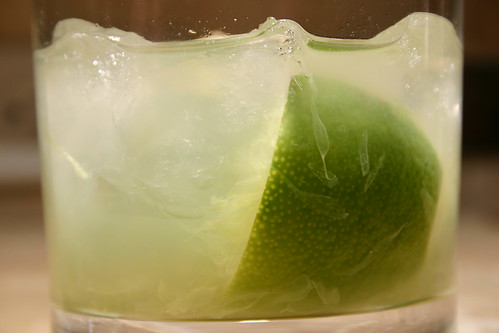
Caipirinha – Carioca for a Week

Posted by Reese On February - 28 - 2009

Sipping a Caipirinha truly makes you feel like a Brazilian, if only for a short time. The fresh lime flavor, sweetness and grassy flavor of the cachaça meld in to a truly wonderful drink. The flavor is extremely refreshing, not unlike a slightly alcoholic limeade. Not to mention these drinks are exceedingly drinkable. That said, as I discussed earlier in the week muddling this drink really is key to the flavor profile. As is granulated sugar rather than simple syrup. The muddling action extracts some of the oils from the lime peel which are then infused into the resulting cocktail. This changes the drink in the same way that a flamed orange peel or a lemon twist.

Caipirinha

So, what about the choice of sugar? I began my week using plain white sugar which worked very well. Feeling that I might be able to change it up a bit I tried using demerara instead. This helped to deepen the natural sugar flavors that the cachaça brings to the party. There is one downside to this choice though. Since the demerara sugar adds additional flavor it can mask subtle flavors in the cachaça. So, given that I’d say give it a try but make sure you choose a cachaça with a bold enough flavor to stand up to the demerara.

Although there are a few recipes for the Caipirinha floating around most of them seem to follow the same general formula. Namely: 1 oz cachaca, 1/4 lime (cut in to two wedges), and 1 tsp sugar. Some recipes, Gary Regan’s for example, call for three ounces of cachaça. That’s going to make for a pretty hefty cocktail and since these go down very easy it could get out of hand pretty quickly. With that in mind my suggested recipe cuts back the cachaça to only two ounces, but keeps the formula the same. I highly suggest you mix one up and enjoy the carioca life. Even if it is fleeting.

Caipirinha (Cocktail Hacker)
2 oz Cachaça

1/2 Lime (4 wedges)

2 tsp Sugar
1) Muddle lime and sugar until sugar is dissolved

2) Add cachaça and cracked ice

3) Stir until well combined

Scofflaw – Feels Good to be This Bad

Posted by Reese On February - 22 - 2009

Sure, it’s no longer against the law to mix and drink these cocktails, but we can always pretend right? The Scofflaw is the perfect drink for that kind of pretending too. The ingredients are classic, especially if you go with Rye, and you should. The flavor can range from dry to sweet depending on your taste. Finally, the color is simply stunning.

Scofflaw Cocktail

I started my experiments this week with The Joy of Mixology recipe (2 oz Rye, 1 oz Dry Vermouth, 1/2 oz Lemon Juice, 1/4 oz Grenadine) and found it to be a little too dry for my liking. The next recipe I mixed up (1 1/2 oz, 1 oz, 3/4 oz, 3/4 oz), from Forgotten Spirits and Cocktails, was on the opposite end of the spectrum, much too sweet. After a couple recipe tweaks I settled on one that I really like which ups the sour and sweet notes while keeping the whiskey and vermouth flavors present.

Scofflaw Cocktail with Hibiscus Grenadine

Scofflaw (Cocktail Hacker)
1 1/2 oz Rye

1 oz Dry Vermouth

3/4 oz Lemon Juice

1/2 oz Grenadine

Some parting comments. I tried both rye and bourbon in this cocktail and found both worked very well. But, as in the Manhattan, I felt the spiciness of the rye worked better in this application. I also used my homemade hibiscus grenadine that I discussed earlier in the week which is a little less sweet than some. Depending on the sweetness of your grenadine you may want to play with the amount you add to get the sweetness you’re looking for.

The Bronx – An End to a Tasty Week

Posted by Reese On February - 14 - 2009

I’ve really enjoyed my week with the Bronx. I hadn’t experimented a lot with oranges in the past so I decided that this week my focus would be on finding the right orange juice for this cocktail. To start my journey I found all the oranges I could and got to juicing. From left to right they contenders are: Cara Cara Navel, Valencia, Minneola Tangelo, Moro (Blood Orange), Honey Tangerine and the bottled contender, Simply Orange (Original Pulp Free).

Orange Juice Tasting

Now, a couple quick comments. One, I realize not all of these are oranges, but they all have similar flavors so I added them to the running. Two, I had a Navel in my fridge that I was going to use for the juice off, but it was a bit leathery, so I passed. Now for some results.

Cara Cara Navel – The color of Cara Cara juice, a gorgeous orange/pink, is truly the star here. They are sweet but not overly so and have little to no sourness.

Valencia – Valencia juice is the flavor I naturally associate with freshly squeezed orange juice. There is basically zero sourness and the sweetness is pleasant but not overwhelming.

Minneola Tangelo – Nice orangy flavor here, but with extra sourness. This quickly became my front runner for the Bronx.

Moro (Blood Orange) – As with the Cara Caras the color is the star here. The Moro steps up though with a perfect level of sweetness for this drink and the additional sourness that some of the others are lacking. We then had two contenders for the Bronx position.

Honey Tangerine – It’s quite obvious where the name for these came from. The juice is very sweet and has a distinct honey flavor. A good fruit, but not what I was looking for in the Bronx.

Simply Orange (Original Pulp Free) – Sweet with nearly no sourness. Definitely lacks the brightness of fresh squeezed but it’ll do in a pinch.

So, as you can see from my quick reviews I was leaning towards a juice with more sourness for this cocktail. From playing around with the Bronx I feel a juice with additional sourness leads to a more balanced cocktail. As a side note I found you can add a small dash of lemon juice to the sweeter juices to get some additional sourness. About 1/4 oz in 1 oz of orange juice worked out very nicely in the case of the Simply Orange, but I’d start with about an 1/8 then sample and add more if needed.

Blood Orange Bronx Cocktail

Now for some recipes. I started with The Joy of Mixology recipe (2 oz Gin, 1 oz Orange Juice, 1/4 oz Sweet Vermouth, 1/4 oz Dry Vermouth, 2 Dashes Orange Bitters). What first struck about the Bronx is that it’s not nearly as sweet as I expected them to be. I had anticipated with the orange juice and sweet vermouth that this drink would be on the sweeter side. Not so. Instead you get wonderful gin flavor, a subtle orange sweetness and the herbal notes of the vermouth. These go down very easy, which oddly (or perhaps not so) seems to becoming a trend around here. I didn’t find the orange bitters added much other than, not surprisingly, a touch of bitterness. Overall, I’d call them optional.

Next I tried out the recipe in Difford’s guide (1 1/2 oz Gin, 1 oz Orange Juice, 3/4 oz Sweet Vermouth, 3/4 oz Dry Vermouth). The result is much more vermouthy, which in this case I don’t think is really necessary. With this much vermouth you lose the subtle notes from the gin and orange juice.

Finally I went to Wonderich’s Esquire recipe (2 oz Gin, 1 oz Orange Juice, 1/2 oz Sweet Vermouth, 1/2 oz Dry Vermouth). Basically Regan’s recipe with some increased vermouth. This version is also very dry. Sadly with this much gin the orange flavors somewhat faded in to the background.

Minneola Tangelo Bronx Cocktail

Info in hand I was ready to craft my own version of the Bronx. I like more sour notes so I suggest going with Moro blood oranges or Minneola Tangelos. I’m guessing there are plenty of other oranges that would give the needed sourness, but I live in a land locked state with zero citrus, so I use what I can find. 3/4 oz of each vermouth was too much, but 1/2 oz pumped up the herbal flavors and that worked for me. Finally 2 oz of gin seemed to dilute the orange, so for my money 1 1/2 oz is the way to go.

Bronx (Cocktail Hacker)
1 1/2 oz Gin

1 oz Orange Juice

1/2 oz Sweet Vermouth

1/2 oz Dry Vermouth

Orange Twist for Garnish

The Pegu – Pretty in Pink

Posted by Reese On February - 7 - 2009

This week seemed to fly by and during the course I made a lot of Pegus and enjoyed all of them, well, for the most part at least. As I mentioned at the start of the week my starting recipe was the one from The Joy of Mixology (2 oz gin, 1 oz Cointreau, 1/2 oz lime juice, Angostura to taste, orange bitters to taste). First, a bit of a gripe about recipes. I personally don’t like recipes that list an ingredient’s quantity as “to taste.” Seeing as I came to this recipe never having made the drink I at least need somewhere to start. Now, I’ll grant you that with bitters it’s not terribly hard to guess, the number is likely between one and four dashes. So, to end this mini rant, if you ever write your own cocktail book I suggest giving a range (2-4 dashes) rather than “to taste.”
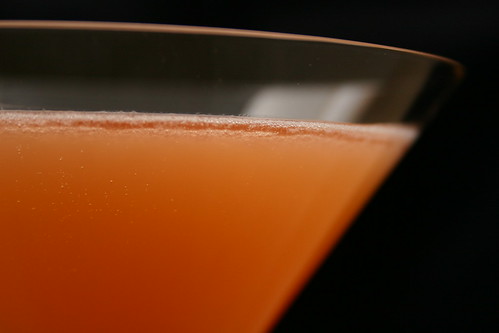
Pegu Club Cocktail

My whining aside, I went with two dashes each for the record, this recipe resulted in a nicely pink colored cocktail that was quite tasty although not as sour as I would like. Although, with this recipe as it is written I could drink a lot of these, they go down quite easy and I would be very pleased to receive one mixed in this manner at a bar. My parting thought on this particular recipe is that I would like the bitters to be more present, at least the Angostura.

Next came Pegu Master Doug’s recipe. As I mentioned earlier in the week Doug was kind enough to share all of his Pegu secrets, but to add to the awesomeness I received this picture mid-week. See! 9th level Pegu mastery, right there, with photographic proof. Doug’s recipe (1 1/2 oz Bombay Sapphire, 1/2 oz Cointreau, 1/2 oz Lime Juice, 2-4 dashes Angostura) had the additional sourness that I was looking for balanced nicely with the sweetness of the Cointreau. I decided to go with four dashes of Angostura after my previous batch. The additional spice flavors and smells were extremely pleasant and I really like the deeper pink color that results. Much more photogenic as you can see from the pic above.

Finally, I mixed up the recipe from Esquire (2 oz gin, 3/4 oz Cointreau, 3/4 oz lime juice, 1 dash Angostura, 1 dash orange bitters), although I upped the Angostura to three dashes and the orange bitters to two dashes. This recipe very slightly ups the sour and sweet components from Doug’s recipe and adds some additional flavor with orange bitters. Although I must say the orange bitters don’t really add a ton to this cocktail they certainly don’t draw from it. If you have some in your bar add a bit, if you don’t add the Angostura and know you’re still going to drink a fine cocktail.

Both Doug’s recipe and the one from Esquire are very good. If you’re looking for something slightly sweeter and more sour then go with Esquire’s recipe. If you’re looking for a drink that puts more emphasis on the gin then Doug’s is the hands down winner. Doug also mentioned during our long months (minutes) of training that on occasion he’ll add half an egg white to the mix and shake violently. I’ve tried this technique in the past, most notably with the Whiskey Sour, to varying degrees of success. I decided I’d give it a go and ended up mixing it up three separate times. The first ended badly when I knocked my shaker closed too hard and couldn’t get it back open. A bit of a tip in the event you experience this; run water as hot as you can get it out of the tap over your shaker for about a minute. Two things will happen. One, the metal will expand slightly and two, the air pressure will increase inside the shaker. You should then be able to pop it open.

Mixes two and three came out of the shaker okay, but I failed to produce the nice foamy top that I look for with this technique. I’m not sure was caused the foam failure. My current speculation is either the increased percentage of alcohol, some ingredient in the Cointreau (I’ve had trouble foaming with it before), or poor shaking on my part. Matters not, though, as I was not a fan of the flavor of the Pegu with egg white added. I felt it muted the flavors of the bitters and the gin far too much for my liking.