Cocktail Hacker

    Hack What You Drink

Archive for the ‘Wrap Up’ Category

The Last Word – Or is it?

Posted by Reese On April - 18 - 2009

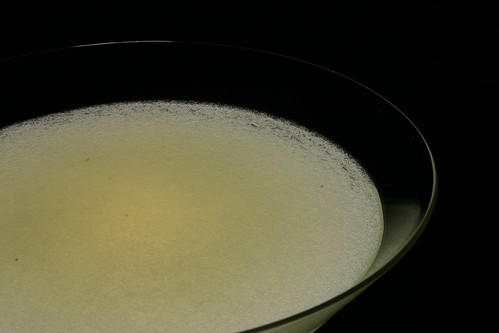
Ok, I’ll admit the tag line on this wrap up post is a little lame, but I couldn’t think of anything better and it certainly won’t be the last words I speak of this cocktail so it is kinda fitting. In that odd, play on words, sort of way. I really enjoyed this week’s cocktail. The recipe that I found nearly everywhere I looked (equal parts of Gin, Green Chartreuse, Maraschino and Lime Juice) was quite tasty albeit a bit too sweet for my palate. The Chartreuse gives it a very nice herbal background while the lime juice keeps it citrusy.

The Last Word

I opted for Plymouth gin when mixing this week and although that certainly wasn’t a bad choice I feel that the stronger flavors overwhelmed this lighter gin. Going forward I’d mix this with a gin with slightly more backbone, like Junipero. To attempt to correct the over sweet flavor I took the advice of Michael Dietsch from A Dash of Bitters and altered the recipe slightly by increasing the gin and decreasing the maraschino. This resulted in a cocktail that was even more pleasant.

The maraschino flavor was decreased, which was nice in that it allowed the herbal notes of the Chartreuse to come through even more. As was expected the sweetness decreased, but be aware, this is still a fairly sweet cocktail. This is definitely my prefered recipe. I considered tinkering more, but felt that any more changes would result in a new cocktail entirely.

The Last Word (A Dash of Bitters)
1 1/4 oz Gin

1 oz Lime Juice

1 oz Green Chartreuse

3/4 oz Maraschino

Ward 8 – Back on the Horse

Posted by Reese On April - 12 - 2009

My friends, I have fantastic news! I’m back on the bourbon horse and loving it. I started the week with a bit of trepidation, but that soon faded as I was reunited with my delicious old friend, tasty American whiskey. The Ward 8 was a perfect reintroduction to this fine spirit although, in the future I’ll be mixing mine with rye. The spirit of choice in recipes from my library and the vast interwebs were a mixed bag between rye and bourbon.

Ward Eight

I would guess this stems from two things. First rye was the American whiskey of choice pre-prohibition and as such most classic recipes are going to reference this spirit. There was, however, a sad time after prohibition all the way up to only a few years ago when rye wasn’t widely available, if you could find a bottle at all. This led to a number of classic cocktails being rewritten to included bourbon instead. While this is certainly not a bad change you lose the spiciness that rye brings to the cocktail.

This week I tried both rye and bourbon to get a feel for the difference and found that, for my palate, rye was a much better match for this drink. The spiciness of the spirit played very well with the sweet and sour flavors of the citrus juices. If you don’t have a bottle of rye on hand and want to mix this one up, give a bourbon with a higher rye content a try. Bulleit springs to mind as one of my favorite rye heavy bourbons. However, I’d urge you to grab a bottle of rye next time you’re shopping. My mixing rye of choice is Rittenhouse 100 proof. It can be found for relatively cheap and has a nice spicy flavor that works great in cocktails.

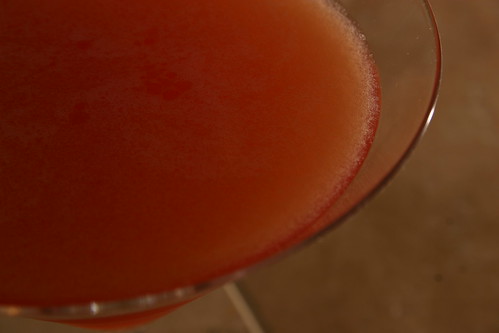
I started my week of imbibing with the Joy of Mixology recipe and was very pleased. This cocktail is nicely citrusy with the rye shining through on the back end. The grenadine doesn’t add a huge amount of flavor, but does add a nice color and some possibly needed sweetness. In my case my oranges weren’t overly sweet and as such I had to go with 1/4 oz of grenadine to get the balance that I was looking for. I would have stuck with this recipe and called it a week were I not spurred on the by the deliciousness of rye to try a recipe that placed more emphasis on the spirit.

The recipe I found on Esquire’s website was a logical next step. It keeps the rye steady at 2 oz, but drops the orange and lemon juice to 3/4 oz rather than the full 1 oz called for in the Joy of Mixology. The result is a drier cocktail that focuses more on the rye. Exactly what I was looking for. The fruit juice and grenadine flavors are still present and the sourness is dialed down a bit. Esquire (David Wondrich) calls for 1 tsp of grenadine, but from my previous experiments I opted for 1/4 oz (1 1/2 tsp) and found that worked better in my case.

Certainly this progression could continue by next trying the cocktail with 1/2 oz each of the juices, but I think at that point you start to get away from what a Ward 8 was intended to be. That hasn’t stopped people in the past (I’m looking at you Martini), but it wasn’t what I was after so I stopped my experimentation with a slightly modified version of the Esquire recipe. As always I’m open to hearing suggestions on possible modifications.

Ward 8 (Cocktail Hacker)
2 oz Rye

3/4 oz Orange Juice

3/4 oz Lemon Juice

1/4 oz Grenadine
1) Combine ingredients in a shaker with ice

2) Shake until thoroughly chilled

3) Strain into a cocktail glass

Psuedo-Relatives and the Like

Posted by Reese On April - 5 - 2009

I started the week with little knowledge of amaretto and I feel I’m finishing it with at least a base that I can work from going forward. I went with a bottle of Disaronno which turned out to be a good choice. The almond notes were present and the sweetness was at a good level. I didn’t detect the bitter almond flavors I was expecting. I’m curious if some companies downplay that element to appeal to a broader audience. I am interested in hearing if anyone has another favorite amaretto, so please chime in.

I decided to use Famous Grouse as my scotch of choice for this week and think that’s a really good option for folks who might be a little concerned about the bold flavors of some scotch. Famous Grouse, and other blends, tend to keep the expected key points of single malt scotch (smoke, peat, etc) but the blending brings them all to very nice mellow levels. The end result is a scotch with character that mixes well in cocktails. For the vodka recipes I opted for Oval which I mentioned earlier this week. I also decided to entertain Rich’s suggestion and mix up a Grandpappy. For that one I used my favorite mixing bourbon, Eagle Rare.

Grandpappy

Godfather (2 oz Scotch, 1 oz Amaretto) – A very tasty cocktail, not overly sweet with the notes of both the scotch and amaretto playing nicely together. As I suggested above I don’t think a good single malt would be the right choice for this cocktail as some of the subtle flavors of both the scotch and amaretto would be lost.

Godson (2 oz Scotch, 1 oz Amaretto, 1 oz Light Cream) – Even less sweet than the Godfather and deliciously creamy. I found that the addition of cream smoothed out the flavors of this drink and added a richness that I found tremendously pleasant. This would definitely be a drink I’d choose for an after dinner cocktail to enjoy slowly.

Godmother (2 oz Vodka, 1 oz Amaretto) – Interestingly this recipe tasted slightly sweeter than the Godfather which really shouldn’t be the case seeing as they call for the same ratios. One change I made was to stir this drink rather than shaking it as I did with the Godfather which certainly could have resulted in less dissolved water in the drink. A comment in my notes sums up my take on this drink perfectly, it’s “basically diluted amaretto.” Which is good if you’re not partial to whisk(e)y but I think this cocktail lacks the depth of flavor you get in the Godfather as a result.

Goddaughter (2 oz Vodka, 1 oz Amaretto, 1 oz Light Cream) – A very smooth and creamy drink. Again lighter in sweetness than its godparent and less complex than its godsibling. This drink, like the Godmother is really more about the amaretto. Overall a tasty beverage.

Grandpappy (2 oz Bourbon, 1 oz Amaretto) – This one turned out too sweet for me, which I’m thinking is a combination of the natural sweetness of the bourbon and not stirring long enough. The light smokiness of the bourbon comes through which is a good thing. A good cocktail, but not my favorite of this batch.

Of this group of cocktails the Godfather and Godson were my favorites. Were I looking for a pre or during dinner cocktail I’d go with the Godfather since it’s not as rich. A tip on technique that I missed on my first read through the recipes. Like all clear, spirit only cocktails the Godfather, Godmother and Grandpappy should be stirred rather than shaken. However, make sure you stir the cocktail for a good 30 seconds. You need the ice melt to balance the cocktail.

I got some cool pictures this go-round. You can see them all in the Flickr pool.

Pisco Sour – Cold. Frothy. Delicious.

Posted by Reese On March - 29 - 2009

To use the parlance of the time I came in to the Pisco Sour as a total newb. I’d never had one, never actually seen one in person and never even tasted Pisco. But I was ready and willing to learn. That willingness led me to what seemed like the logical beginning, learning about Pisco itself. There is a ton out there to read, but I’ll give the brief high level view.

Pisco is a non wood-aged form of Brandy local to both Peru and Chile. There are four basic types Puro, Aromatic, Mosto Verde and Acholado, of which you’ll primarily see Puro and Acholado in the US. Pisco Puro is composed of a single variety of grape, usually the Quebranta and tends to be drier than Pisco Acholado. Acholado is composed of a mixture of two or more grape varieties. I was only able to track down two bottles of Pisco at my local liquor store, Don Cesar Pisco Puro and Montesierpe Pisco Acholado. Both were very good but I found myself using the Acholado more as it had a more complex flavor and was a touch sweeter.

So, beyond the differing grape varietals the primary difference between Pisco and Brandy is that Pisco is typically not wood-aged. Peruvian Pisco is aged for a short time (at least 3 months) in a non-reactive vessel (eg glass, steel, etc). This results in a spirit that is much more about the grapes themselves than the wood the spirit is aged in. As Matt echoed in his comment on my intro post, I can’t see myself sipping a glass of straight Pisco in the same way I would Brandy or Cognac. Although, in a cocktail this spirit really is very tasty.
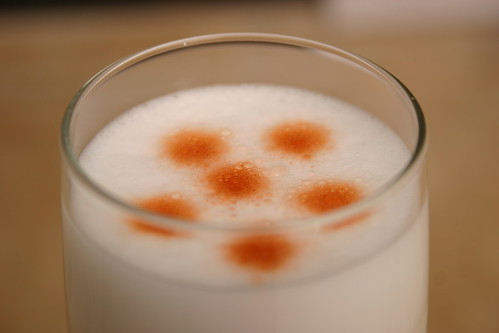
Pisco Sour

Speaking of cocktails, let’s talk Pisco Sour. Like I did last week I’m going to discuss the components of the drink individually and then give my favorite recipe.

Pisco

I’d suggest starting with an Acholado. The increased breadth of grape flavor and slight additional sweetness both work very well in this drink. However, if Pisco Puro is all you can find then certainly get that. I enjoyed both this week.

Citrus

You’ll find recipes for this drink calling for both lime juice and lemon juice. It seems that the citrus used in Peru most closely resemble the flavor of a key lime, which, if you haven’t had one, is a flavor akin to a cross between lemon and lime juice. I tried both lemon and lime juice (both fresh) this week and liked both, but I prefer lime juice. It has a slightly more complex flavor and I think “feels” more South American to me for some reason.

Egg

Like the Whiskey Sour I profiled a few months back this drink is much better with the addition of an egg white. However, unlike the Whiskey Sour, I think this drink requires an egg white to be correct. Since the bitters are suspended on the top of the egg white foam rather than mixed in to the drink you simply can’t get that effect without them. Use fresh eggs so as to avoid possible fridge smells and produce better foam. Some recipes call for half an egg white. I would think that’s all you really need but I’ve been using a full white as it’s easier to measure and produces a lot of nice foam.

Bitters

The true bitters to use for this cocktail are Amargo bitters from Peru. However, since I don’t have any and Peru is a bit of a long drive, I had to use bitters I have on hand. Most modern recipes will call for the use of Angostura bitters as they’re very common and most home bars have a bottle lurking somewhere. I don’t find the aroma of Angostura bitters to be hugely pleasing though. It’s not that the aroma is bad, more that it isn’t very powerful. So, I branched out. I found that three drops each of Fee Brother’s Old Fashioned Bitters and Angostura Orange Bitters make for a nice orangy-cinnamon aroma that I find works very well in this application.

Sweetener

I’d say stick with standard simple syrup for this drink. A couple recipes I found called for rich syrup, but I found that made a cocktail that was too sweet for my palate.

Shaking

The general rule of thumb is that cocktails with egg whites should be shaken dry (no ice) first for about 10 seconds, then shaken normally for another 30-60 seconds. This method works very well, but there is a drawback that I don’t like. When you shake dry you’re increasing the temperature of the ingredients slightly due to friction. When your shaker contents, specifically the gases, warm up they expand. This expansion can cause your shaker to pop open and leave you with at best a sticky shaker. Thus, I steer clear of this method if at all possible. Instead I vigorously shake the drink with ice for at least 30 seconds, 60 if my arm can stand it. This gives a very nice foam and doesn’t leave me or my kitchen sticky.

Service

Finally your drink is ready to serve, but what vessel do you go with. Gary Regan suggests a champagne flute and I agree with him. The champagne flute concentrates the sprinkling of bitters into a smaller area directly under your nose. That way you get the maximum effect of the bitters with each sip.

Recipe

Okay, so I’ve ranted for quite a while now, let me wrap this up with the recipe that I like the best. It’s a modification of Stevi Deter’s recipe from her blog, Two at the Most. The only changes I make are to decrease the simple syrup a bit and bump up the lime juice to make the drink a touch less sweet.

Cocktail Hacker Pisco Sour
2 oz Pisco

1 1/4 oz Lime Juice

3/4 oz Simple Syrup

1 Egg White

Garnish with Bitters (3 Drops each Fee's + Angostura Orange)
1) Combine Pisco, Lime Juice, Simple Syrup and Egg White

2) Shake with ice for 60 seconds

3) Strain into a champagne flute

4) Top with a few drops of bitters
A Little Taste of the Emerald Isle

Posted by Reese On March - 22 - 2009

After reading my post about my dislike of coffee you may have come ot the conclusion that I also don’t like this week’s cocktail, Irish Coffee. You would, however, be incorrect. There are enough add-ons in this drink that the classic cup of coffee morphs to become something bigger and, I’d argue, better.

Irish Coffee

I’m going to take a slightly different approach to the wrap up this week. I found in looking at recipes that they’re all basically the same when you get right down to it. So, based on that knowledge, I stuck with the Joy of Mixology recipe all week and focused instead on each individual component. I’ll get the ball rolling with the ingredient I know the least about.

Coffee

This is the key component of the Irish Coffee and as such you want to choose a coffee you’re going to enjoy. For the record I’ve been using Silver Canyon Grand Cafe Decaf this week and found it to be very good. Although my experience with coffees is a bit limited. I think the old adage that applies to cooking with wine, “Always cook with a wine you’d drink on its own”, could also apply here. You should definitely pick a coffee you’d drink on its own, but I’d also suggest you splurge on a really nice roast for this drink. The additional flavor is really going to make this drink shine.

Whiskey

As for the spirit the same general principle holds true. Pick a whiskey that you know you enjoy. However, I’d say don’t spend the extra money on an aged Irish whiskey. The additional flavor components will be nearly wiped out by the coffee. For me I’ve been using Jameson’s that was left over from when I made Irish Cream and found that it worked perfectly.

Sweetener

There are a ton of possible sweetening options for this drink, but I focused on the classic and most readily available, simple syrup and granular sugar. Regan suggests using simple syrup as it mixes in much better. I completely agree and were I mixing these up behind a bar that is certainly the option I’d choose as it brings the drink together much quicker. However, what I don’t like about this option is that you’re choosing the level of sweetness for the imbiber. My preferred method for mixing these at home is to serve sugar on the side and let the person consuming the drink add however much, or little, they prefer.

Regan also suggests using demerara syrup to increase the depth of flavor of the drink. I tried both white sugar and demerara in both granular and syrup forms and can say he’s definitely right. Although the added flavor is subtle it is definitely present and really compliments the whiskey flavors. If you don’t have demerara sugar you could also try turbinado. That said, special sugar is definitely not an absolute requirement. Your drink will turn out great with just plain white sugar as well.

Cream

It’s very tempting to simply buy a can of whipped cream and use that, but I don’t think it gives the result you’re looking for. Canned whipped cream introduces too much air and as a result it’s much more difficult to mix in to the finished drink. Instead I’d suggest getting a pint of heavy cream and lightly whipping it until it’s the consistency of shampoo (bad analogy, I know, but I couldn’t think of a better one). Basically you want the cream thickened to the point where it hasn’t reached soft peaks yet and still flow when you tip the container. I’d also suggest adding a small amount of sweetener to the cream as you whip it. That way you can add a little more cream than you would think is necessary and your guest can leave a bit on top to enjoy while sipping the drink.

So there you have it. I’ve really enjoyed the Irish Coffee this week. The flavor of the whiskey is still present although it’s playing a supporting role to the coffee. The cream and sugar tame the strong flavor of the coffee somewhat which made it much more palatable for me. The result is a drink that is truly more than the sum of its parts. And, overall, I will definitely be drinking this cocktail again. I think it would be perfect for a cold winter afternoon. Although, it’s been in the 70s here all week and the drink was still damn good.