Cocktail Hacker

    Hack What You Drink

Archive for the ‘General’ Category

Lemon Drop – Vodka Faceoff

Posted by Reese On March - 5 - 2009

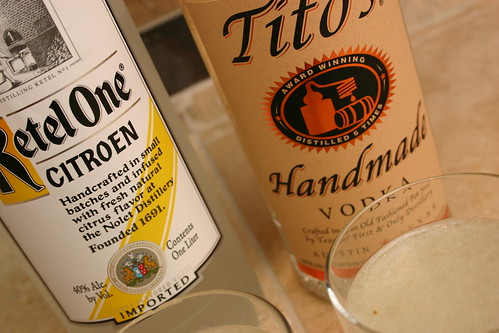
This week we’re presented with another cocktail that calls for citrus flavored vodka, but is it really worth it? I decided to do another side by side comparison, like I did with the Cosmopolitan, and see if I can discern the difference. For my tests I used Ketel One Citroen and Tito’s Handmade.

Vodka Face Off

The first thing I noticed, and it was very obvious, was the increased lemon smell of the cocktail with the Ketel One. Once you start sipping that additional lemon is even more apparent. I also found the lemon flavor to be deeper and more complex. My guess is that this additional depth of flavor likely comes from oils in the fruit’s peel that you simply don’t get with regular vodka.

Now, all of that said, I need to point out that the cocktail with Tito’s was still damn tasty. I would have happily drink them never knowing that they lack the complexity of a drink made with citrus vodka. however, now that I’ve tried them side by side I know I’d be able to detect the lacking flavor. If you only have regular vodka on hand, go ahead and mix one up. You’ll be pleased. However, if this becomes a regular cocktail for you, you owe it to yourself to pick up a bottle of citrus vodka.

Cachaça – Brazilian Rum?

Posted by Reese On February - 28 - 2009

You’ll note that on every bottle of cachaça you buy in the US there is a sublabel listing it as Brazilian Rum. It’s not a coincidence or marketing gimmick. Rather this is a requirement of the Alcohol & Tobacco Tax and Trade Bureau (TTB). The TTB in their own words defines a rum as:

Spirits distilled from the fermented juice of sugar cane, sugar cane syrup, sugar cane molasses or other sugar cane by-products at less than 95% alcohol by volume (190 proof) having the taste, aroma and characteristics generally attributed to rum and bottled at not less than 40% alcohol by volume (80 proof)

In addition the TTB requires that every bottle of alcohol sold in this country be labeled with, among other things, the class and type designation of the spirit. Which means , to the dismay of the producers, that although cachaça is distinct from rum it must be labeled as such to be sold here. So, now that you have some background on why it’s labeled as rum, let’s discuss why it’s not rum at all.

Cachaça is a spirit produced from fermented sugar cane juice where as most rum is produced from fermented molasses instead. Like rum the distillation process for cachaça varies from producer to producer, but there is another interesting wrinkle in the production process that sets cachaça apart. Legally additional sugar can be added to the final spirit to alter the flavor profile. Namely, up to six grams of sugar per liter can be added to the product without declaring on the label. Camper English, in this interesting post about cachaça, goes on to note that if the producer adds between six and fifteen grams of sugar per liter the cachaça is now referred to as sweet cachaça or cachaça adocada. This is an interesting tidbit to be sure as it explains some of the differing flavor profiles we experienced in our tasting.

There are lots of other interesting facts about cachaça. For example Brazilians consume the equivalent of eight liters per person yearly and cachaça is the number three most distilled spirit in the world behind vodka and soju. If you’re interested in reading up on some more fact this page on the American University web site has some good info and goes in to moderate detail about the history of the spirit as well.

Before getting started this week I’d certainly heard of cachaça in the past and read some comments about it. I even had a bottle in my collection, but always thought of it simply as another kind of rum. So I went to work educating myself. I did some reading about cachaça’s history, read up on fellow bloggers comments and took a look at the brands available. Once I felt slightly more well informed I did what any good cocktail fan does, I invited some friends over for a cachaça tasting.

Nearly everyone at the tasting had never had cachaça before so this was an educational and entertaining experience for us all. Our process was dead simple. I gave everyone a small bit of each cachaça one at a time and we sipped and commented. I frantically wrote down the thoughts and present those results here for your enjoyment.

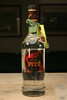
Pitu

Pitu Cachaca The first thing you’ll note about Pitu is its warm, buttery fruit aroma. Following that initial sniff you’ll start to pick up the vegetal notes that are common of both cachaça and rhum agricole. The flavor echoes the vegetal characteristics and buttery notes from the aroma and adds a very subtle wood aged flavor. Ted wasn’t fond of the wood flavors, but that’s not particularly suprising as he generally doesn’t like wood aged spirits at all. The rest of us found it quite pleasant though. In tasting this cachaça you’ll also note it’s drier than some of the others you’ll come across, about the level of a white rum. Overall a good cachaça and very affordable. If this is the only cachaça available in your area you won’t be disappointed.
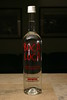
Boca Loca

Boca Loca Cachaca Boca Loca was up next on the docket. The first thing you’ll notice about the aroma of this cachaça is additional sweetness. You’ll get some of the same buttery notes in the aroma but less of the vegetal qualities. The flavor, not surprisingly, echoes both the aroma. You get a subtle, pleasant sweetness that comes through as well as a nice butterscotch/caramel flavor. Overall this cachaça has a much more mild flavor and, as one of the tasters put it, “you can tell it’s going to be friendlier to you.” Of the five cachaças we tasted this was our second favorite. Because of the milder, less funky flavor this would be a great cachaça to introduce people to the spirit. This brand is also very affordable and is certainly worth picking up if you’re looking to make some caipirinhas.
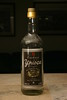
Ypioca Crystal

Ypioca Cachaca Crystal Next up was a bottle of Ypioca Crystal that my cousin brought back from a trip to Mexico. Since this bottle was purchased at a duty free store you’ll note there is no “Brazilian Rum” category on the bottle. Just an interesting tid bit. This cachaça had a very unique fruit aroma, specifically that of a granny smith apple. The fruitiness isn’t as aparent in the flavor, rather you get a bit of initial harshness that fades in the aftertaste. Not an unpleasant cachaça, but also not our favorite of the evening.
Cabana

Cabana Cachaca Cabana is a bit of the odd man out in this tasting for a couple of reasons. First it bills itself as authentically Brasilian which has peeved some natives as, although the spirit is produced in Sao Paulo, the company is owned and managed from NYC by a former employee of JP Morgan. Second, Cabana bills itself as an ultra premium cachaça and to that end employs a double distillation process. You’ll immediately pick up the extra distillation in the aroma or lack there-of. Colton, who had just arrived as we were pouring the Cabana, commented that it “smells like liquor.” Which, although humorous on the surface, is actually quite true. You pick up very faint grass notes in the aroma, but that’s about it. The flavor is similar to that of a vodka. Overall we didn’t much like this cachaça and at the high end of the cost scale (~$35) I would say it’s not worth it.
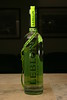
Leblon

Leblon Cachaca Leblon was our final cachaça for the night and the crowd favorite. In the aroma the buttery notes are more subdued and the grass is more forward with this one. In addition you’ll pick up additional fruit smells peeking through. Ted described the aroma as reminding him of corn candy which, if you’re not familiar with it, is sweet corn flavored hard candy you can find in asian markets. There is a subtle golden hue to the spirit which likely comes as a result of the short aging in brandy barrels. The flavor is more complex than the others hitting on the fruity and grassy notes picked up in the aroma. Finally, you don’t get the same aftertaste that you do with the Pitu, Ypioca and Cabana. In summary, this is my cachaça of choice for a caipirinha as it adds a great level of complexity. It’s a bit pricier than some of the others, but I think the additional cost is well worth it.

So, now you at least have enough information about cachaça to talk intelligently at a dinner party and I certainly hope our tasting has given you some guidance on what brands to keep an eye out for. If, however, you’re a skimmer and would prefer not to read this whole post, let me give you the two second summary. Cachaça although labeled rum in the US is most certainly a different beast. If you’re looking for your first bottle to add to your home bar try Boca Loca or Leblon. Boca Loca is going to give you a more mellow, slightly sweeter flavor and the Leblon is going to be more complex and slightly more expensive. You won’t be disappointed with either.

So there you have it. Go forth and imbibe.
Muddle or Shake?

Posted by Reese On February - 25 - 2009

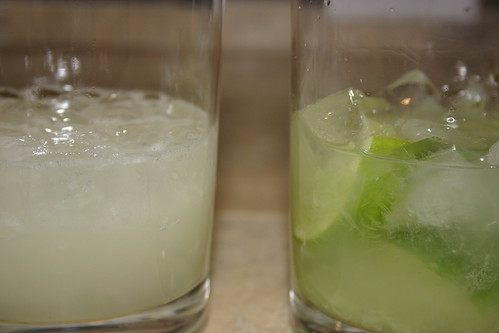
The question has plagued mankind since the development of the Caipirinha. Should one muddle the cocktail or shake? It’s the kind of question fights have been started over. Well, I couldn’t let this dilemma go unsolved any longer. So I mixed up a Caipirinha show down for the benefit of all of us.

Muddle or Shake?

Caipirinha (Shaken)
2 oz Cachaça (Leblon)

1 oz Lime Juice

1/2 oz Rich Simple Syrup
Caipirinha (Muddled)
1/2 Lime cut in Wedges

2 tsp Sugar

2 oz Cachaça (Leblon)

The verdict is a bit of a hard one. Both of these varients have their pluses and minuses. Certainly both are very tasty and I definitely wouldn’t turn either down.

Shaken

Pro – Very simple to mix in batches ahead of time or in large quantities

Pro – Tremendously drinkable

Con – Sourness of the lime covered by simple syrup

Con – Subtleties of the cachaça are lost

Muddled

Pro – Classic recipe

Pro – Bitterness from peel and oils adds to flavor

Pro – Much more complex flavor

Pro – More interesting presentation

Pro – Cachaça flavor comes through more

Con – Longer prep

Con – Requires muddler

Con – Need fresh limes

Okay, those last two cons for the muddled recipe are both a stretch. You can use damn near anything blunt as a muddler and I’d certainly hope you were buying fresh limes for this drink anyway. So, the final verdict? Make the muddled version unless you’re either making them by the pitcher full or mixing tons and tons of them for a party.

Still worried that you can’t make this drink due to a lack of muddler? Fear not. The good folks at Leblon Cachaça will happily send you a muddler for only the cost of shipping ($2.00). I used mine to make the drink you see pictured above. You can pick yours up right here.

The Pegu Apprentice

Posted by Reese On February - 4 - 2009

dougWhen you want to learn to be a plumber you apprentice with a master plumber. When you want to be a blacksmith you apprentice with an experienced metal worker. When you want to make good Pegus you seek the wisdom of Doug Winship. Doug is known in cocktail circles for his website, The Pegu Blog, through which he explores all manner of cocktail topics. This month Doug is focusing his efforts on Tiki drinks which is, as always, proving to be both entertaining and educational. In conjunction with his cocktail efforts Doug heads Killing Time, Murder Consultants. Quite an ominous name for a very fun company. Killing Time offers “custom, unforgettable, murder mystery entertainment events to corporate and private clients.” Sounds like a damn fine time to me.
Knowing that a master existed I began my harrowing training regimen. Picture a scene from Karate Kid only with me, a well rounded (physicall) geek, standing on one foot atop a pole embedded in the sand. Each moment requiring the utmost of concentration lest I fall to my certain death. Ok, let’s face it, it wasn’t at all like that. But I did email Doug and he quickly offered up his Pegu secrets. The first key lesson to be learned was the proper pronunciation of Pegu. Pee-zhoo for those of you playing along at home. Second lesson was the master’s recipe which is currently the front runner in my taste tests and his suggestion of Bombay Sapphire works wonderfully. I’ll give you the full run down at the end of the week.

Pegu (Doug Winship)
3 parts Gin (1 1/2 oz Bombay Sapphire)

1 part Cointreau (1/2 oz)

1 part Lime Juice (1/2 oz)

2-4 Dashes Angostura Bitters

1/2 Egg White [Optional - Smoother but less subtle]

My sincere thanks go out to Doug for pointing me in the right direction this week. Much appreciated.

Super Bowl XLIII Drink #1: Beer

Posted by Reese On January - 27 - 2009

I imagine that were I to ask 10 people randomly what alcoholic beverage I should get for a Super Bowl party 9.5 of those people would say beer. For the record, one guy was kinda on the fence between beer and green tea, but I think he might have problems. All kidding aside, beer is the most popular beverage consumed during the Super Bowl, and I’m willing to go out on a limb and include all football games in that statistic. It makes sense too. Beer is relatively cheap, there are a zillion different types to choose from, and it tastes good, or so they claim.

Thing is, the Super Bowl is a long event. If you figure in some pre-game and post-game TV you’re looking at a possible six hours of football. You and your buddies clearly can’t be hammering back a beer with an ABV of 9% for that amount of time. No one would be able to get home, even if they’re walking. You also don’t want a beer that has a huge or exotic flavor to it. You’d end up drinking a couple and be done for the day. Again, not going to work. The solution? Session beers.

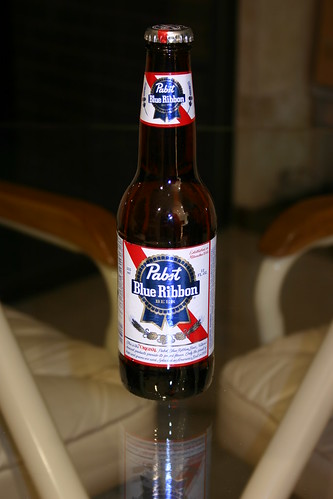
Pabst Blue Ribbon

Lew Bryson of Seen Through a Glass has a series of posts on his site called the Session Beer Project. In his outline of the project he details what he considers to be the qualities of a session beer. In summary:

  1. Alcohol under 4.5%
  2. A flavor that doesn’t overpower
  3. The beer doesn’t overpower the conversation
  4. Reasonable price

Basically, the beer should be inexpensive, flavorful but not overly powerful or so interesting that it takes the focus away from the activity at hand and fairly low in alcohol. The benefits of going with a beer like this? Well, for one, you can drink them all day and not get exceedingly drunk. Second, the beer isn’t all that pricey so you don’t feel bad buying a bunch for when your mooch friends show up empty handed. Third, the beer has a good flavor that isn’t overly powerful. You can drink them for the duration of the game and not get “beered out” as it were. Finally, the flavor isn’t so off the wall that it causes you all to stop watching the game and discuss the subtle nuances of the brew.

So what do you choose? Well, since I’m not much of a beer guy I can’t give too much input on this one so I turned to my friends first. Chris, who generously offered his input for the beer tasting, had this to say “Why on god’s green earth would you want low alcohol beer?” Which, although a valid point, doesn’t help much. Being from the great state of Arizona he did profer one suggestion that might be worth checking out if you’re a Cardinals fan, namely 8th Street Ale from Four Peaks Brewing Company. Which at 4.5% ABV comes in at the top end of our scale.

Next I turned to my cousin Tara and her husband Steve, both natives of Pittsburgh and huge Steelers fans (Yes, they even have a drawer full of “Terrible Towels“.) Steve’s initial suggestion is Iron City Light (4.15% ABV) which is still consumed regularly among locals. Although Iron City Lager (4.5% ABV) fits our rules and is claimed to be “the ‘Burgh’s signature beer” my local sources are telling me to avoid it. The exact review was “It’s terrible.” Good enough for me. If you’re wanting to go with a microbrew instead, Penn Pilsner (4.0% ABV) from the Penn Brewing Company comes highly recommended.

That should at least get you started and you’re looking for some other suggestions, take a peek at the Top Session Beers list put together by BeerAdvocate. Lew also has reviews on his site of each of the beers he’s tried in the Session Beer Project. Definitely worth taking a look if you’re wanting to try something new.