BarSmarts Advanced
Have you ever been talking with someone and had them say something along the lines of “Oh, man. You put Jeff and Dave in a room and you’ve got a party.” You know the kind of line I’m talking about. It’s rarely true, very cliche and mostly annoying. Well, get ready for one of my own. When you put Paul Pacult, Dave Wondrich, Andy Seymour, Dale DeGroff, Doug Frost and Steve Olson in a room all kinds of things are going to happen. First, you’re going to laugh, a lot. Second, you’re going to be drinking, and it’ll be damn good stuff. And, third, you’re going to learn more than you can hope to remember about spirits and cocktails, their history, their recipes and how to make and serve them. In short, you’re going to have a damn fine time.
So, why the rambling intro and ass-kissing? In April I was invited to attend the final day of BarSmarts Advanced (BarSmarts Live) as it rolled through Denver. BarSmarts is a two track course of spirits and cocktail education. The first, and primary, track is BarSmarts Advanced. The second, which I’ll highlight later, is BarSmarts Wired. With BarSmarts Advanced, upon enrolling, you’re sent a workbook and a set of professional bar tools. You work through the workbook on your own, reading the modules, watching online videos and taking online quizzes. Once you’ve completed all of that you move on to the final step, BarSmarts Live.
BarSmarts Live is what I got to sit in on. Your day begins with 4 hours of discussion about spirits and cocktails, their history and how to make and serve them right. All of this is led by the impressive team of educators I listed above. You start off with an overview of the spirits industry and current trends. Which brings me to an interesting point. While BarSmarts is a partnership between BAR and PernodRicard it is, in no way, a sales pitch for their products. I think a quote from Steve Olson drove it home for me. “We’ll never tell you what (spirits) to use. We don’t care. That’s your decision.” And that was the theme throughout the spirits portion. It’s not so much about showing you some great options, though they do that, it’s about teaching you what makes them great so you can pick out great spirits for your cocktails.
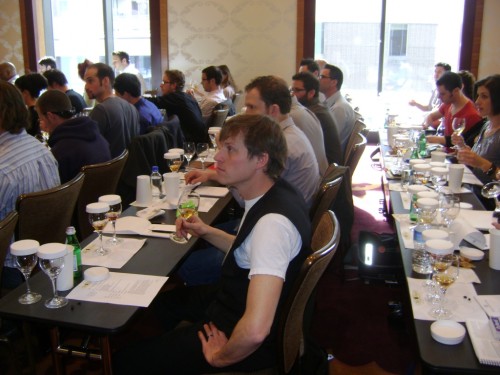
Following the general spirits discussion, Paul Pacult takes the helm. If you’re ever given the option of enjoying a tasting with Paul, do it. Doesn’t matter how many tastings you’ve been to, you’ll have a great time and you’ll learn a ton. For this tasting we had five, unlabeled glasses sitting in front of us with a small pour of spirits in each. Paul takes you through each glass one by one, only revealing the brands at the very end. The first two spirits are clear (gin and vodka you’ll come to realize) and you’re walked through their profiles. First the aroma, then the flavor. I’m not going to detail the process as it really deserves a post of its own, but suffice it to say it’s simple, thorough and not at all pretentious. Following that intro, you’re left with the other three glasses. Each is filled with a brown spirit and you’re given no hints going in as to what each contains. Through the tasting process you suss out the contents of each and, most importantly, learn why they taste the way they do. So, now that you’ve had a brief, but detailed, intro to spirits tasting, it’s time to move on to cocktails.
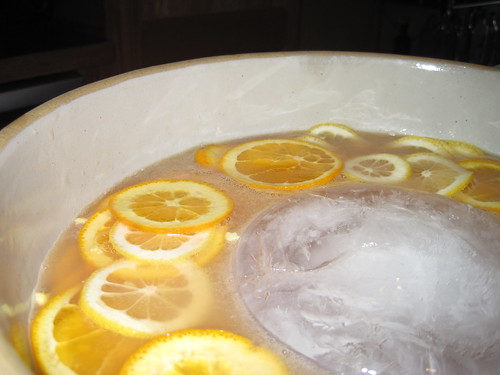
Which brings us to the second session, cocktails. Dale DeGroff starts off the session with an overview of bar service and how to make really good cocktails. His experience and passion for the craft comes through in everything he shares and he definitely has strong opinions, most of which I share. In reference to sour mix, “You can’t overpour sour mix. An ounce, two ounces, it doesn’t matter, it all tastes crappy.” Well said. Dale explains each tool in the kit and why they’re important. And, all along the way, Dave Wondrich is chiming in on the history of the tools and passing around vintage examples from his collection. Ever seen an original Hawthorne strainer or know why it’s called that? Neither had I, but I can now say that I have and I do At the end of the cocktails discussion, Dave dives in to his favorite topic for a bit, punch. Giving a brief history of the category and where it’s going currently (big upswing in popularity, if you’re wondering). Then, the best part, he serves some punch which Dave I think described best. “(It’s) subtle and delicious, so it’s moreish…like you want more.”
Dave wrapped up the discussion and demo portion with a quote that rings more true than I think I realized at the time. “As long as the 21st century continues to suck, people will continue to drink.” I couldn’t agree more. But, for the record, I’m going to be drinking whether the century sucks or not. Somebody’s got to, right?
At this point things break up for a tasty lunch and time to chat with your fellow students. This was also time for a final cram session for a lot of folks, because next up was the practical and written exams. The group was divided in half. The first half going first to the written exam, which includes questions about cocktails and spirits as well as a blind tasting portion. Hint, when in doubt go with citrus and pepper, they’re in almost every flavor profile. The second half of the group was further broken down into groups of seven for the practical exam.
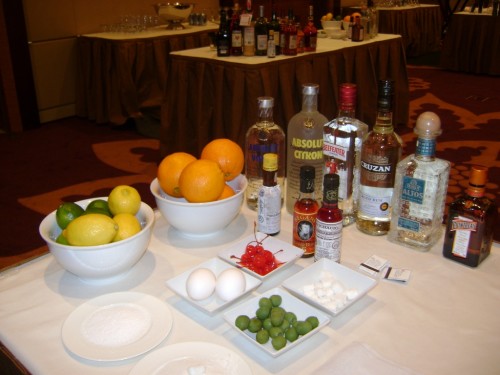
The practical is the part that I think would be the most daunting. The reason why? You’re being reviewed by a member of the panel I listed above. These are guys who have been in the cocktail business for years. They’re the allstars of the field. So, how does it work? Like this. You enter the room and you’re sent to one of the prepared stations. Each station has all the spirits, mixers, tools and garnishes you’ll need to make the cocktails you’ve been studying in the workbook. Then the testing begins. Your reviewer gives you three cocktails to make, in the manner that a bar patron would. “I’ll have a Manhattan on the rocks, with a twist and my girl loves sweet drinks so she’ll have a Margarita. My buddy wants, aww crap, what did he say, it’s a highball…ummm…oh yeah, a Gin and Tonic.” At this point you have eight minutes to make these drinks, from memory, to the best of your abilities.
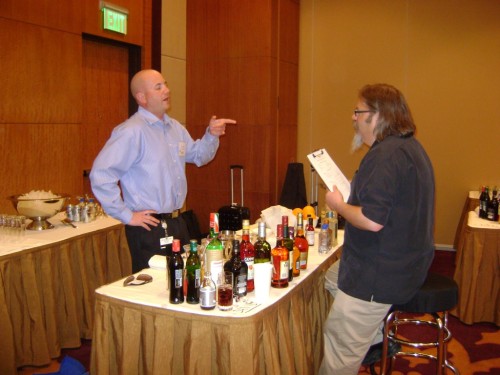
Your task doesn’t end there though. You’re a bartender afterall. You’re supposed to be entertaining as well. So, while you’re being judged on the cocktails you produce you’re also being watched for your banter and overall demeanor. Once the eight minutes is up you leave the testing area and the reviewers sample your drinks and make their final notes. Written exam and practical finished you’re free to be on your way. You’ll find out later whether you passed.
Now that I’ve piqued your interest, a bit of bad news. BarSmarts Advanced is invite only. You can sign up for their mailing list, which might get you on the invite list at some point, but no promises there. Unlike most bits of bad news, this one has a very nice silver lining. You can take the whole BarSmarts program, minus BarSmarts Live, all online via the BarSmarts Wired program. It’s the same course work as Advanced but you don’t get the tools and there is no live day. But, back to the silver lining, for summer 2011 the BarSmarts Wired program is being offered completely free!
So, here’s the long and short of what has become quite a long write up. If you have the opportunity to attend BarSmarts, do it. No questions, no contemplation, just do it. You’ll be a richer (figuratively) cocktail creator as a result. If you’re not on the invitee list or not in one of the cities BarSmarts is passing through, check out BarSmarts Wired. Heck, you might even learn something.
†The product reviewed here was provided to me as a free sample. If you’re wondering what that means check out my sample policy.
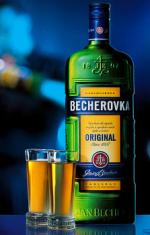 Seems to me that every old-world country has an herbal tonic (or a dozen) that are purported to cure all that ails you. Becherovka is the Czech Republic’s cure-all. Invented in 1807 by Josef Becher and Christian Frobrig, Becherovka is a blend of herbs, spices, oils, alcohol and the mineral rich water of Karlovy Vary. The herbal liqueur is typically served cold as a digestif, but is also consumed as a home remedy for arthritis.
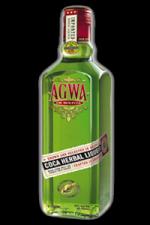 When I first opened the package of
 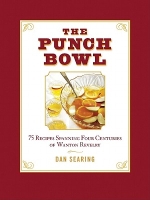 That brings us back to my original problem, where do you find the guidance to make some really epic punch? A great place to start is the recipes of times past. Or, even better, start in the pages of Dan Searing’s